Cultural Tourism in Panchimalco: The Definitive Guide
Immersing yourself in the cultural tourism of Panchimalco is to discover the living soul of El Salvador. This town, known as the “City of Flowers and Palms,” proudly safeguards one of the country’s most authentic indigenous heritages, where Pipil-Nahuat traditions and colonial faith intertwine in a unique mosaic of colors, flavors, and sounds. This definitive guide will take you beyond a simple visit; it’s your key to understanding and deeply experiencing every corner, festival, and face that makes Panchimalco an essential cultural destination.
A Refuge of History and Identity
The name Panchimalco comes from the Nahuat Pantichimalku, meaning “place of shields and flags,” a testament to its indigenous past . After the Spanish conquest, it became a refuge for the Pipil people, who, along with pre-existing Mayan communities, preserved their cultural heritage here . Today, it is the only place in the department of San Salvador where the Nahuat language is still actively spoken, and where it is common to see women wearing the traditional colorful checkered dress, especially during festivities .
This deep-rootedness is felt in every corner, making cultural tourism in Panchimalco an experience of connection with ancestral roots.
Cultural Heart: Unmissable Attractions
To understand Panchimalco, one must visit its emblematic places. The following table summarizes its main cultural attractions:
| Attraction | Type | Description and Cultural Value |
|---|---|---|
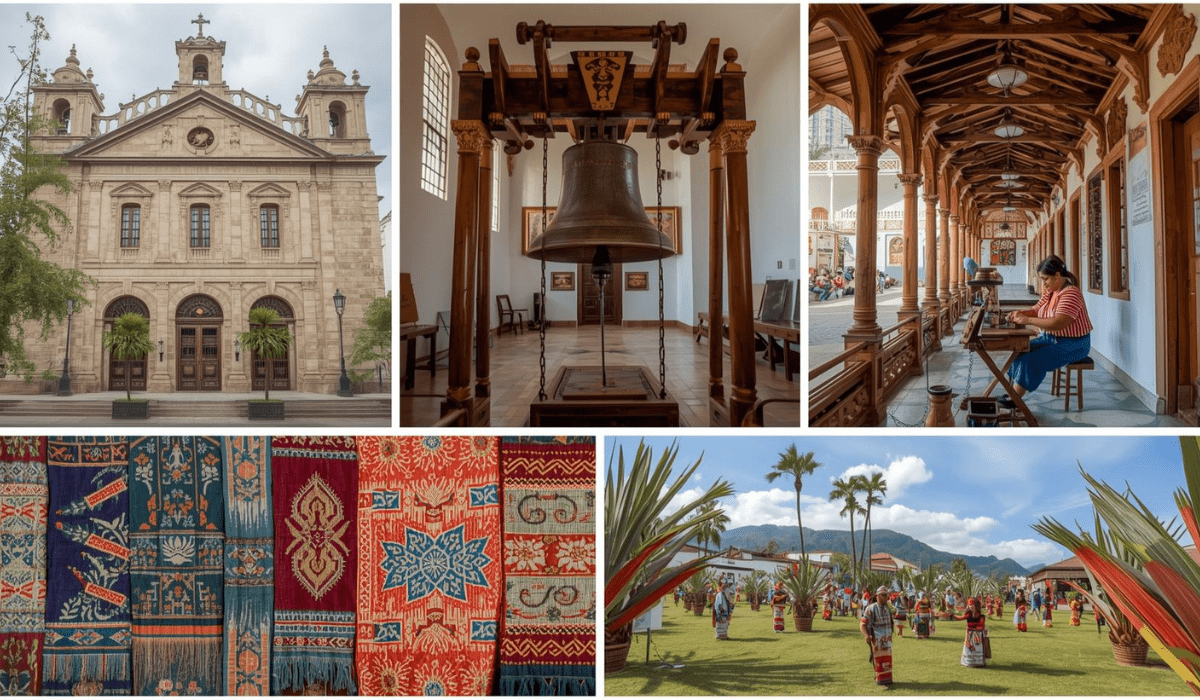
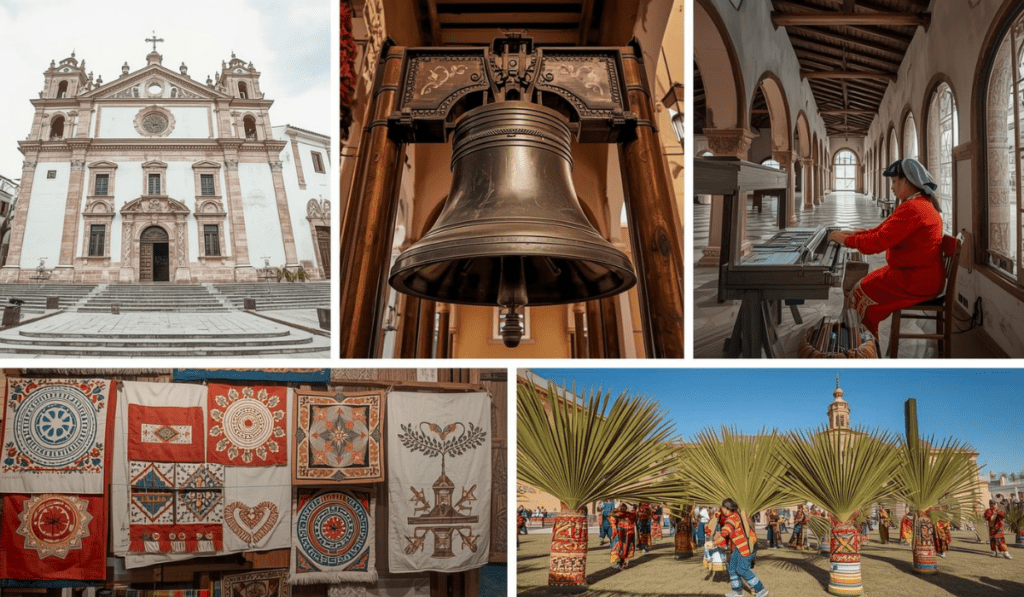
| Santa Cruz de Roma Church | Architectural Heritage | The oldest colonial church in El Salvador (c. 1725). Its Baroque facade, 1563 bell, and 16 balsam wood columns make it a National Monument and the spiritual axis of the town. |
| Festival of Flowers and Palms | Heritage Celebration | The most important celebration (first Sunday of May). Declared an Intangible Cultural Asset in 2023. It is a fusion of pre-Hispanic rain rituals and devotion to the Virgin Mary. |
| Backstrap Loom Weaving Technique | Art and Craftsmanship | Declared a Cultural Asset of El Salvador in 2025. A pre-Columbian technique passed from mothers to daughters to create the traditional “paños pancho” textiles. A symbol of cultural resistance and economic empowerment. |
| Casa Taller Encuentro | Cultural Center | Space founded by painter Miguel Ángel Ramírez. Houses a gallery of local art, a sculpture garden, and is a vital hub for workshops teaching Nahuat and art to youth, preserving heritage. |
| Cinta Race (Carrera de Cintas) | Festive Tradition | Equestrian spectacle during festivals, where riders on horseback must spear rings with a lance. A vibrant display of skill and community tradition. |
Immerse Yourself in the Experience: Living Traditions
True cultural tourism in Panchimalco goes beyond observation; it invites sensory participation.
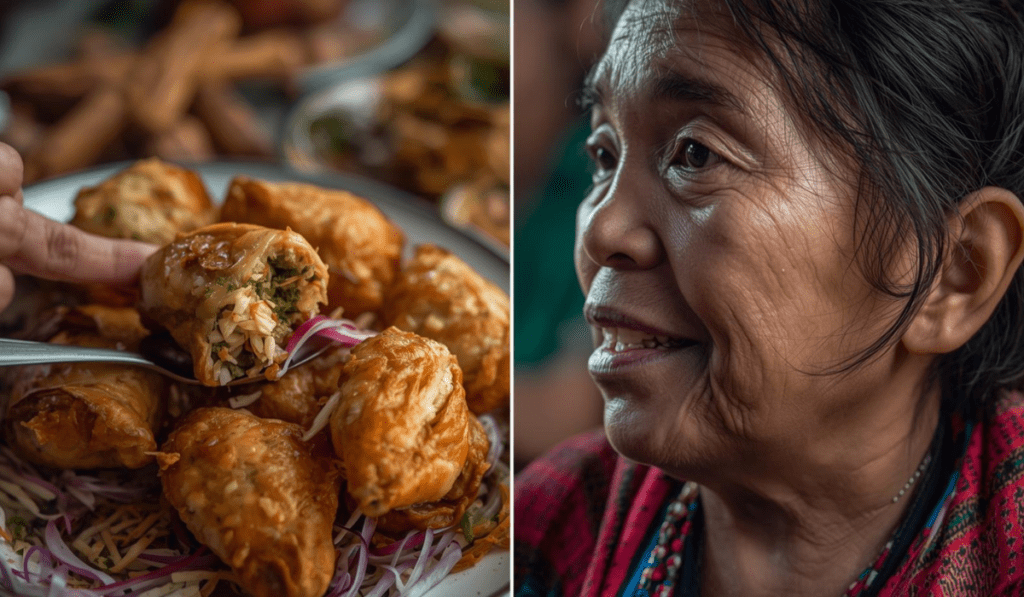
- Taste authenticity: The cuisine is a celebration. Enjoy classic pupusas (considered among the best in the country), atol shuco, or grilled chicken in local eateries or during fairs . Don’t miss trying chicha, a traditional fermented drink made from corn and panela .
- Live the festive cycle: In addition to the May Festival, the Patron Saint Festivities in honor of the Santa Cruz de Roma (from September 1st to 15th) fill the streets with music, devotion, and color . Holy Week is also observed with special fervor and processions .
- Listen to its language: Pay attention; you may still hear words in Nahuat, the local indigenous language. Greeting with a “Ximon tiquetzaki?” (How are you?) will be met with a smile .
Practical Information for Your Visit
- How to get there: From San Salvador, take bus number 17, 17A, or 17B on Avenida 29 de Agosto, next to the Central Market. The trip costs about $0.35 and takes approximately one hour . By car, take the road to Planes de Renderos; the turnoff is well signposted and the journey takes about 30 minutes .
- When to go: For a maximum cultural experience, plan your visit for the first Sunday of May (Festival of Flowers) or during September (Patron Saint Festivities). For a quieter visit, a weekday is ideal .
- Safety: As with any destination, it is recommended to check current conditions, stay in main tourist areas, avoid displaying valuables, and preferably visit during the day. Consider hiring a local guide for a safer and more enriching experience .
- Where to learn more: Visit the Casa de la Cultura for information on activities and workshops . For organized tours that include visits to artists’ workshops or weaving classes, you can contact operators like Adventures El Salvador .
Conclusion: More Than a Destination, a Living Heritage
Panchimalco is not a static museum; it is a community that breathes, weaves, celebrates, and speaks its history every day. Practicing conscious and respectful cultural tourism in Panchimalco means valuing every detail: the sound of Nahuat, the aroma of atol, the colors of a “paño pancho,” and the devotion in a procession. It is a unique opportunity in El Salvador to witness the resistance and beauty of a living culture, inviting you to be a witness and, for a moment, part of its eternal tradition.
Frequently Asked Questions (FAQ)
- What does “Panchimalco” mean?
It means “Place of shields and flags” in the Nahuat language (Pantichimalku) . - When exactly is the Festival of Flowers and Palms?
It is celebrated on the first Sunday of May each year. The main procession usually begins in the afternoon . - Can I buy crafts directly from the artisans?
Yes. At the Casa de la Cultura, in community workshops, or during festivals, you can purchase backstrap loom textiles and other crafts directly, thereby supporting the local economy . - Is it safe to visit Panchimalco?
The main tourist areas are usually safe. Basic precautions are recommended: visit during the day, do not venture alone into non-touristy areas, and if possible, go with a local guide who knows the area . - Are there lodging options in the town?
Yes, although limited. Options include La Casa del Árbol and La Estancia de Alba Clara, which offer a more intimate experience . Many visitors choose to take a day trip from San Salvador, given its proximity .
Share this content:



Post Comment