Guide to Exploring the Colonial Architecture of El Salvador
- The Imprint of History: The Foundations of the Colonial Style
- The Heart of the City: Urban Layout and the Main Plaza
- A Faith Carved in Stone and Adobe: The Colonial Churches
- Life Behind the Walls: The Colonial House
- Destinations to Immerse Yourself in History
- Tips for the Curious Traveler
- A Transforming Legacy: The Importance of Preservation
Discover the authentic colonial architecture of El Salvador, a fascinating legacy of stone, adobe, and tile that forms the historic heart of its towns. This heritage, forged between the 16th and 19th centuries, is much more than a building style; it is the living testament to an era that defined the country’s culture and urban landscape. In this comprehensive guide, we invite you on a journey to understand its unique characteristics, explore the destinations where its essence is most purely preserved, and learn to decipher the stories that its walls, doorways, and central courtyards still have to tell. Prepare to plan an unforgettable route through history.
The Imprint of History: The Foundations of the Colonial Style
Salvadoran colonial architecture was born from a forced encounter. The Spaniards, upon establishing their dominion, imposed a new social, religious, and urban order. The construction of cities and churches was fundamental to this purpose. Although El Salvador was a relatively marginal province within the Spanish empire, this did not prevent the development of its own architecture, adapted to local materials and the needs of the territory.
Its most notable characteristic is the fusion of styles. The designs brought from Spain, mainly of Renaissance and Baroque influence, blended with local labor, techniques, and sensibilities. The result is an architecture of great austerity and solidity, with decorative touches that reflect both the distance from the great centers of power and the creativity of its builders.
The Heart of the City: Urban Layout and the Main Plaza
The Spanish urban model, established by the Laws of the Indies, left an indelible mark. Cities were planned following a “grid pattern” or checkerboard layout, organized around a vital central space: the main plaza.
This space was not a simple park; it was the heart of social, political, religious, and commercial life. Around it, the most important buildings were distributed:
- The Church: Symbol of religious power, always in a prominent location.
- The Town Hall or City Hall: Seat of civil and administrative power.
- The Portals: These structures with covered corridors and columns were the transitional space between the public plaza and shops. They created an “urban hall” where people gathered, socialized, and conducted business.
You can observe this layout at Liberty Plaza (Plaza Libertad) in San Salvador, the former main plaza, and in the central parks of towns like Suchitoto, where community life still revolves around this historic space.
A Faith Carved in Stone and Adobe: The Colonial Churches
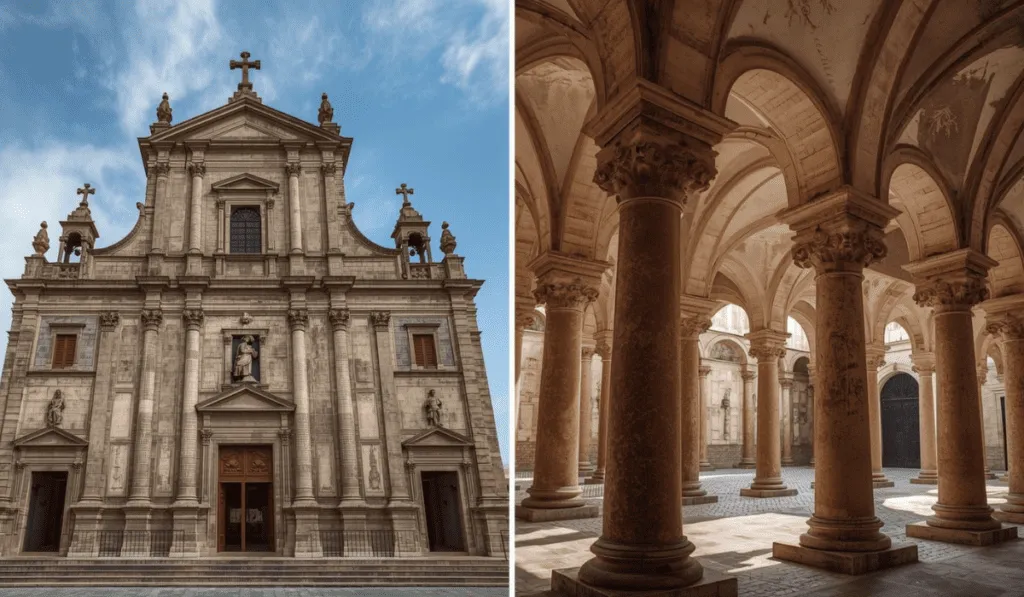
The churches are the most representative and enduring examples of colonial architecture in El Salvador. Built to last and to impress, they reflect the importance of evangelization. Their characteristics responded to the local reality: wide walls of adobe or “calicanto” (a mixture of lime, sand, and stone) to withstand earthquakes, clay tile roofs, and façades that, although austere, present Baroque details in their portals.
These temples are not just monuments; they are a living part of the community. Some of the most notable include:
- San Pedro Apóstol Church in Metapán (1743): Considered the most monumental in scale in the country. Its elevated position on an independent atrium gives it a scenic and powerful presence, dominating the urban landscape.
- El Pilar Church in San Vicente (1769): Notable for its austere and original façade, which seems to anticipate modern abstraction. It features Solomon columns carved in bas-relief, creating a beautiful play of light and shadow.
- Santa Lucía Parish Church in Suchitoto (1853): Although its construction began in the republican era, it is the perfect icon of the persistence of the colonial style. Its white façade and dome decorated with ceramic pieces are emblematic.
Important Note: As experts point out, it is crucial to distinguish between buildings constructed during the colonial era and those built afterwards that replicate the style and tradition. Many of the churches and houses we see today are reconstructions or republican-era buildings that maintained the colonial essence, as earthquakes and time have affected the original structures.
Life Behind the Walls: The Colonial House
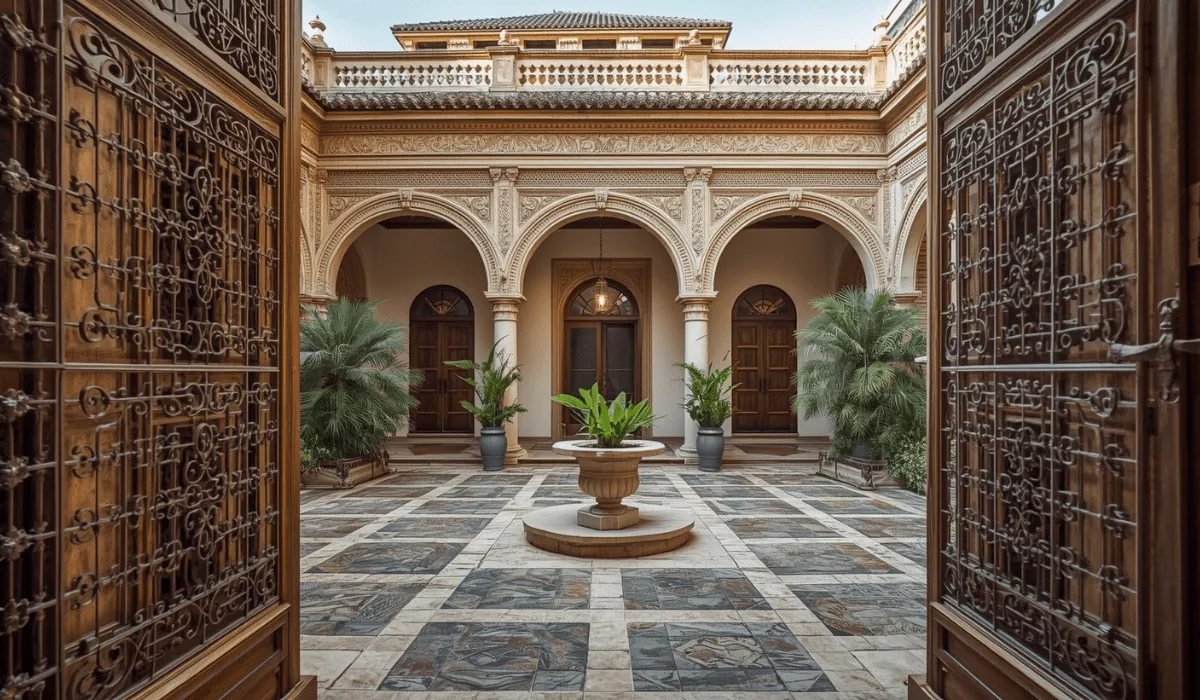
Colonial domestic architecture left a legacy that defines the landscape to this day: the house with a central courtyard. This typology, inherited from Mediterranean tradition, adapted perfectly to the climate and family life.
Its main characteristics were:
- Organization around a central patio: This open space was the heart of the home, providing light, ventilation, and privacy.
- Local materials: It was built with adobe, wood, clay tiles, and wrought iron for the window grilles.
- Continuous and sober façades: On the streets, houses presented plain walls with few and small windows, protecting family privacy. Wealth and life were reserved for the interior, around the patio.
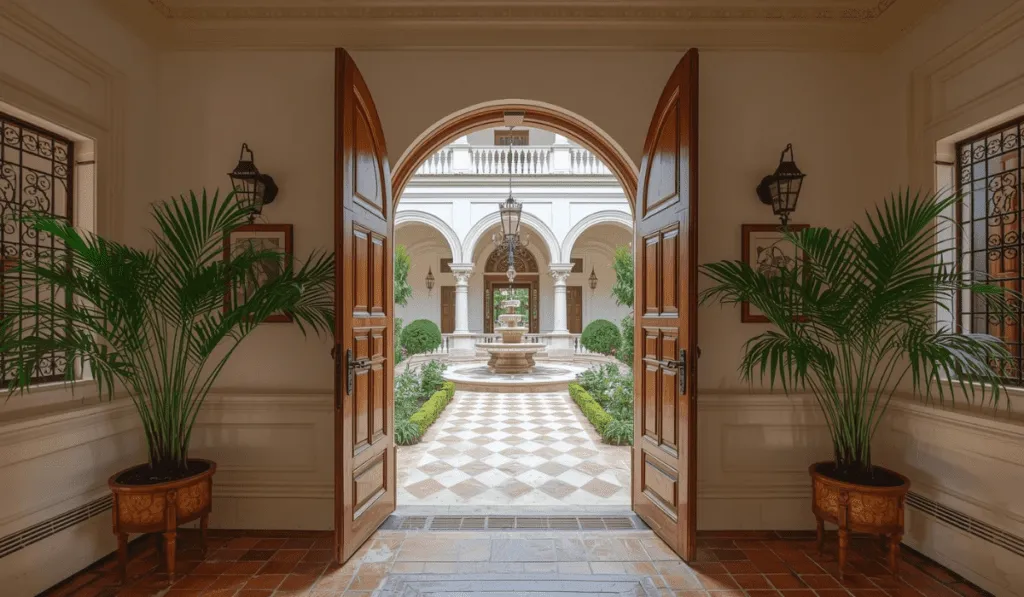
Unfortunately, original examples of colonial houses are very scarce. The main house of La Bermuda Hacienda, near Suchitoto, was a prominent example but was destroyed. Today, the best way to experience this style is by staying in one of the restored large houses that have become boutique hotels in towns like Suchitoto, where you can feel the proportions of the spaces, the coolness of the thick walls, and the tranquility of the central courtyard.
Destinations to Immerse Yourself in History
To experience the colonial legacy, you must visit towns where this heritage is integrated into daily life. The following table will help you plan your route:
| Destination | Colonial Character | Main Attraction | Key Experience |
|---|---|---|---|
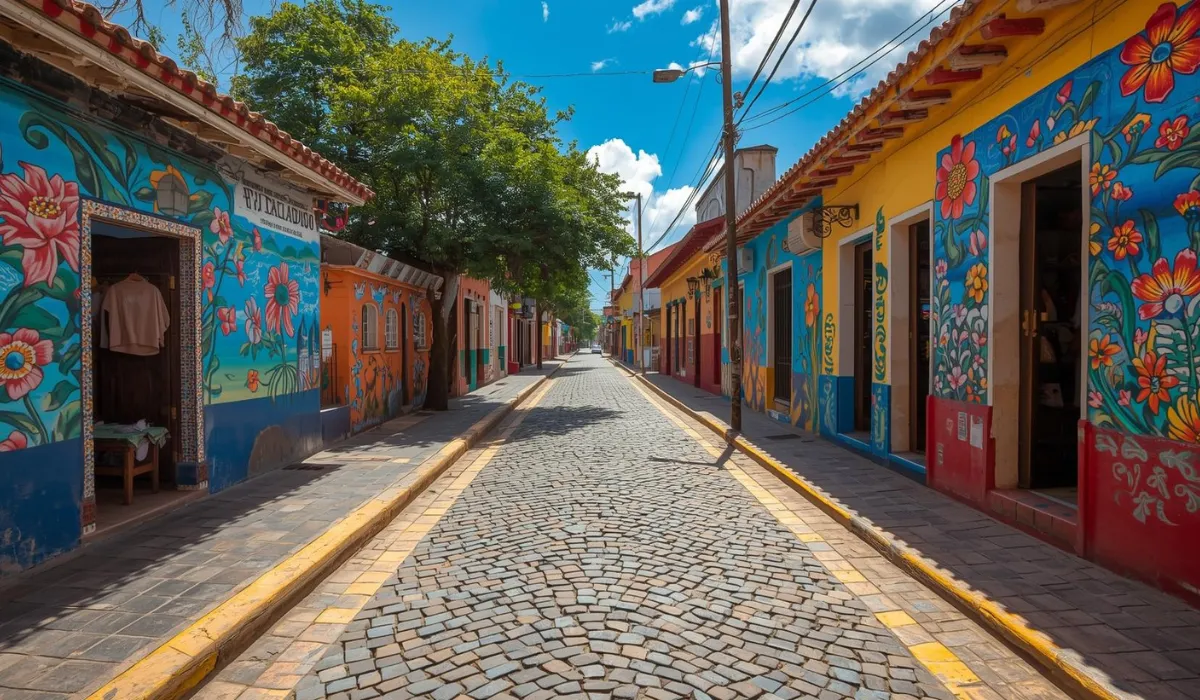
| Suchitoto, Cuscatlán | Maximum expression of the colonial atmosphere. Cobblestone streets, pastel-colored façades, and tile roofs. | Santa Lucía Parish Church, grand houses, indigo workshop, view of Lake Suchitlán. | Walk at a leisurely pace, learn about “blue gold” (indigo), and enjoy the cultural and gastronomic offerings in a preserved setting. |
| Ruta de las Flores (Flower Route) | Group of towns with colonial origin or strong influence, in a natural and coffee-growing environment. | Juayúa & Ataco (founded in 1543), gastronomic festivals, handicrafts, mountainous landscapes. | Visit several towns in a single trip, combining architecture, living culture, nature, and excellent coffee. |
| Metapán, Santa Ana | Home to one of the most important colonial temples in the country. | San Pedro Apóstol Church (1743), of monumental scale and great historical-artistic value. | Admire imposing colonial religious architecture in its maximum expression. |
| San Vicente | Preserves a unique architectural jewel. | El Pilar Church (1769), famous for its austere façade and its Solomon columns in bas-relief. | Appreciate the originality and artistic detail within the colonial tradition. |
Tips for the Curious Traveler
- Best time to visit: The dry season, from November to April, is ideal for walking and exploring comfortably.
- Getting around: To visit several towns freely, renting a car is the best option. There is also public transportation between the main destinations.
- Mindset: Rather than looking for 100% original buildings (a difficult task), value the atmosphere and continuity of the urban fabric. Enjoy a coffee under a portal, talk with locals, and observe how modern life unfolds in a historic setting.
- Footwear: Wear comfortable shoes for the cobblestone and uneven streets, an essential characteristic of these towns.
A Transforming Legacy: The Importance of Preservation
Exploring colonial architecture in El Salvador also means recognizing its vulnerability. Earthquakes, wars, and the pressure of modern development have put this heritage at risk. As architect and historian Rafael Alas Vásquez notes, it is essential to preserve these spaces not only as a tourist attraction but as a way to honor our identity and roots.
As a visitor, your appreciative gaze and your support for local businesses that occupy and maintain these ancient structures contribute to their valuation. This architectural legacy is not a static museum; it is the living stage of Salvadoran memory and identity, a heritage that, with care and respect, will continue to tell its story to future generations.
Share this content:



Post Comment